
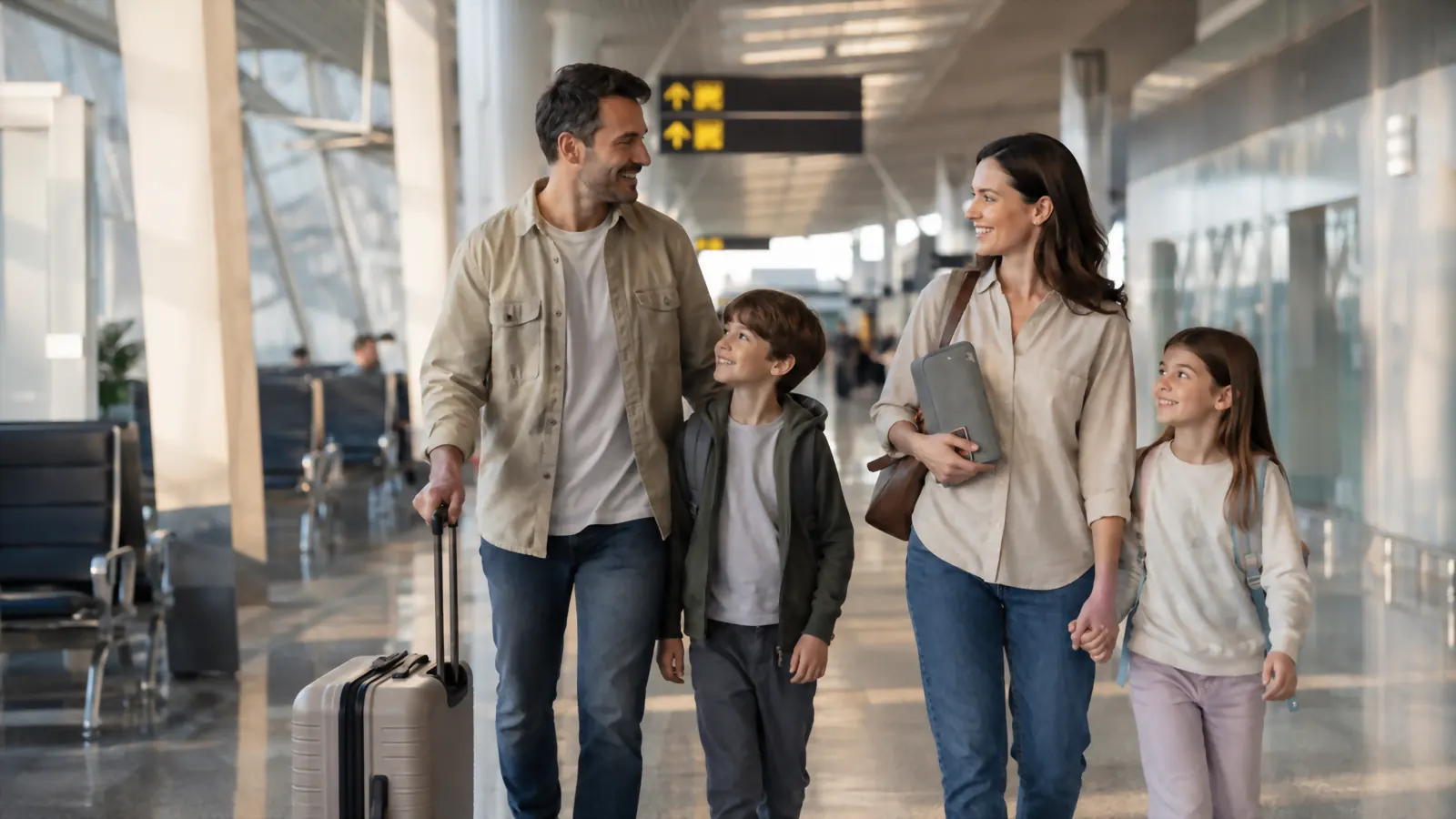
I spend most weeks somewhere that isn't my house, so my own travel kit is dialed in down to the last pocket. Family trips are a different problem entirely. The second there's more than one traveler in the group, you're not managing your documents anymore, you're managing four sets of documents, four boarding passes, and however many opinions about who's supposed to be holding the passports. I've stood at a check-in counter and watched a father pat down every pocket of his backpack while his kids' passports were sitting in his wife's tote the whole time. That scene, repeated with small variations, is what this guide is built to stop happening in your family.
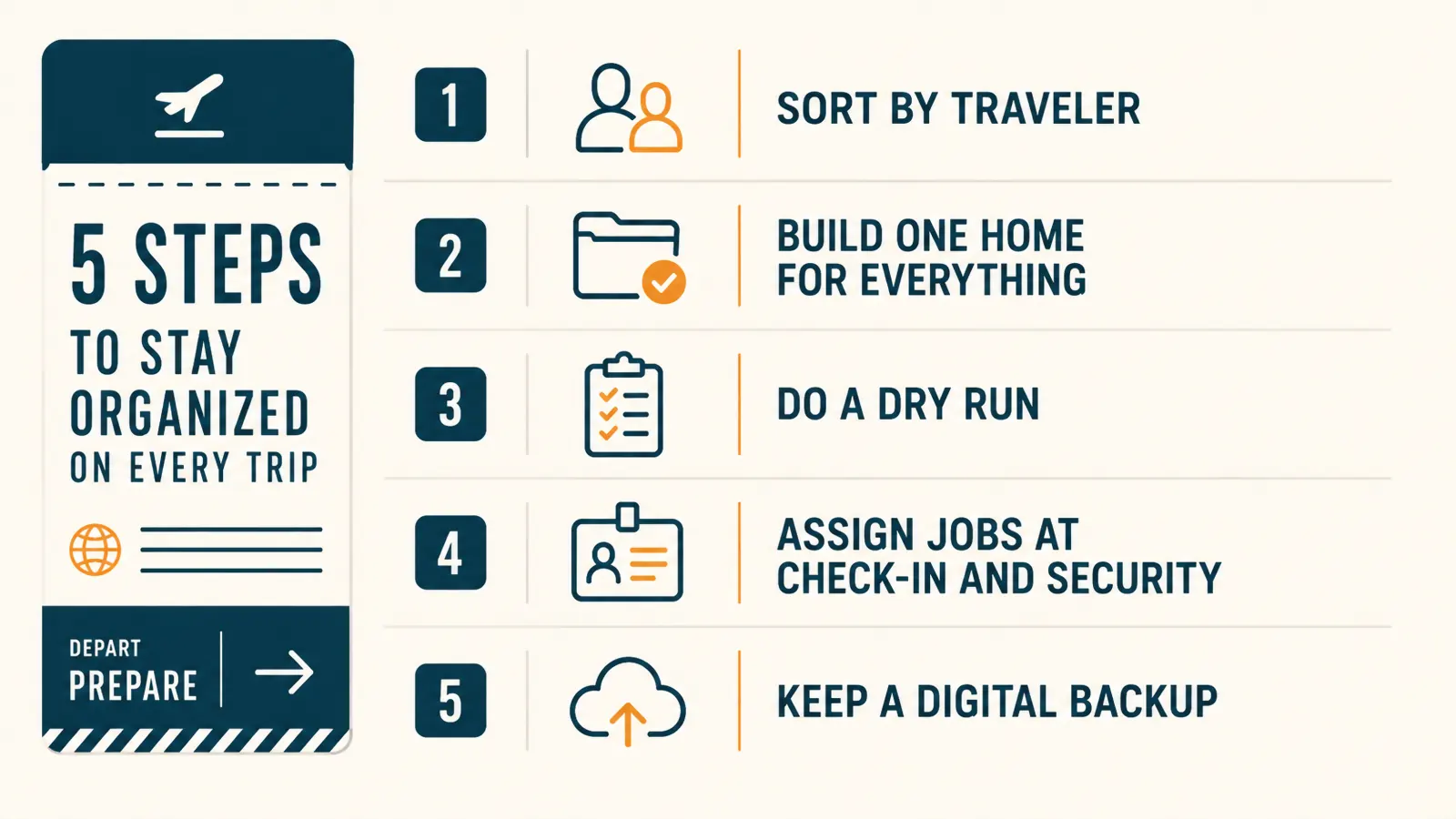
The fix isn't a better memory or a stricter parent, it's a system you set up once and repeat every trip. I run mine around a single family travel document organizer, currently the Valante, because it gives every passport, boarding pass, and itinerary printout one physical home instead of five. That one change does more for a family moving through an airport together than any packing hack I've tried. What follows is the actual process, step by step, from the night before you leave to the moment you're through security. None of it requires anyone in the family to be naturally organized. It just requires doing the same five things, in the same order, until they're automatic, trip after trip, until nobody in the family even thinks about it anymore.
Give Every Passport in the Family One Home
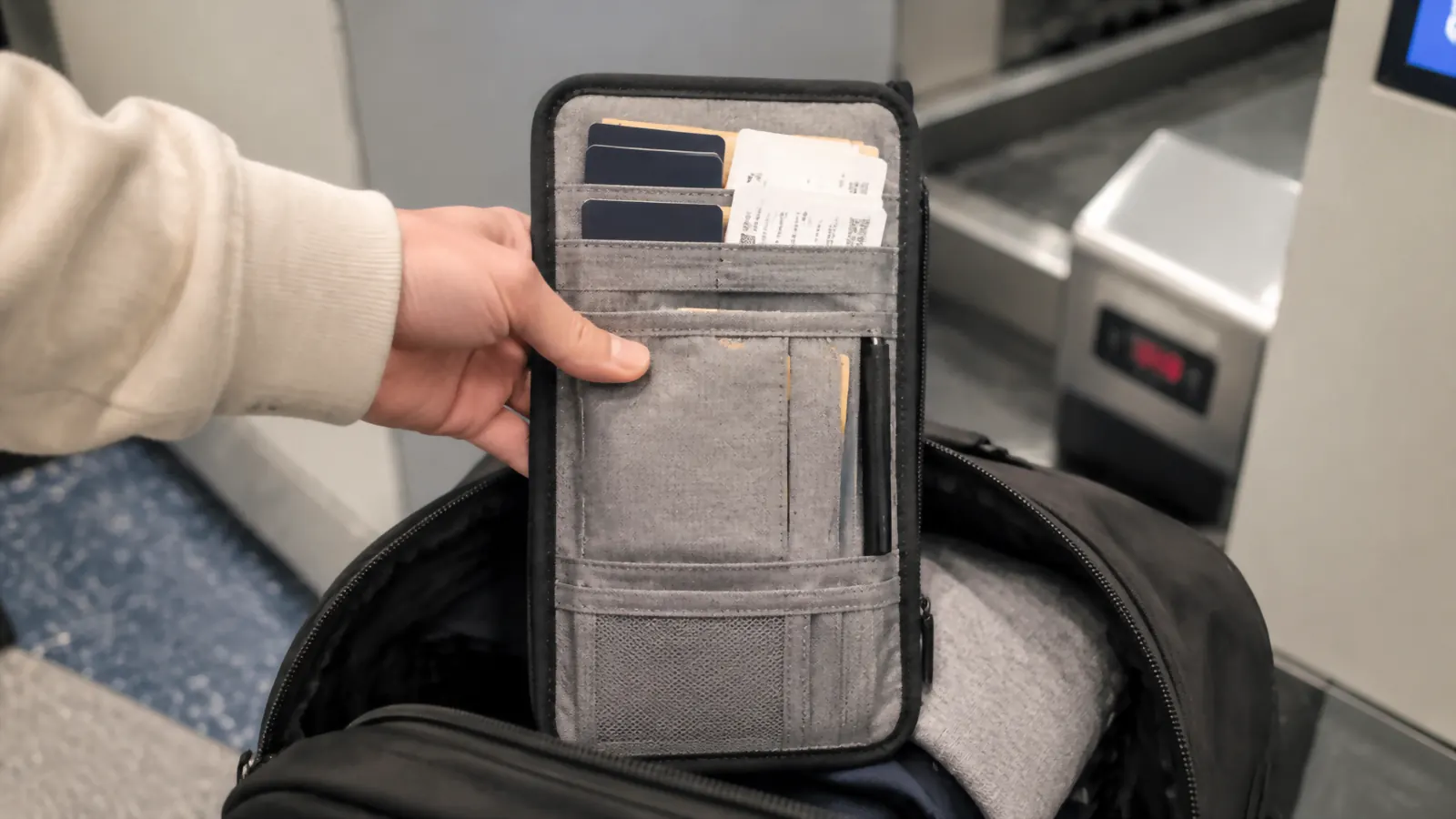
Before you build the routine below, it helps to have one place built for the job. The Valante family travel document organizer is sized to hold a family's passports and boarding passes together, with RFID-blocking protection built in, rather than making you improvise with folders and zip bags.
Amazon Check Today's Price on Amazon →Step 1: Sort by traveler, not by document type
The instinct when you first sit down to organize family travel documents is to group by category: all the passports in one stack, all the boarding passes in another, itineraries somewhere else entirely. That feels tidy until you're at the counter and need one specific child's passport in a hurry, and now you're flipping through a stack of four to find it. Sort by person instead. Each family member's passport, their boarding pass, and any document that's specifically theirs, a visa page, a vaccination card if the destination requires one, should sit together as a unit, so grabbing one traveler's paperwork is a single motion, not a search.
This is where a single family document organizer earns its space in your bag over a loose folder. The Valante is built with a family or group in mind rather than one traveler, which means you can keep everyone's documents in the same case while still being able to pull one person's stack out without disturbing the rest. Whoever is holding the organizer at the gate can hand a child their own passport and boarding pass in one motion instead of hunting through a mixed pile of eight or ten documents while a line forms behind them.
For a two-child family this sorting might take five minutes the first time you do it. For a group flying with grandparents or a nanny added to the trip, it takes longer, and that's exactly when a system pays off the most. The more people traveling together, the more valuable it is that finding one person's documents never requires touching anyone else's.
Step 2: Build one home for everything before the airport
This step happens at home, ideally the night before, never in the car on the way to the airport. Every document that will be needed between your front door and your arrival gate goes into the same case: passports, boarding passes if you've printed them, hotel confirmation, rental car voucher, any printed itinerary. Nothing gets left in a jacket pocket, a purse, or a kid's backpack "just this once." The whole point of organizing family travel documents this way is that there is exactly one place to check, not four separate bags scattered across the house or the car.
I keep the organizer itself in a carry-on that never gets checked, and I say that out loud to the rest of the family before we leave the house. It sounds obvious until you're rushed and someone tosses a bag into the trunk that's headed to the checked-luggage line. The RFID-blocking layer in the Valante is a nice bonus for the passports sitting inside a bag that's now moving through crowds and lines all day, but the bigger win is simpler: one case means one thing to grab, not a mental checklist of five things scattered across five different people.
Step 3: Do a gate-side dry run the night before
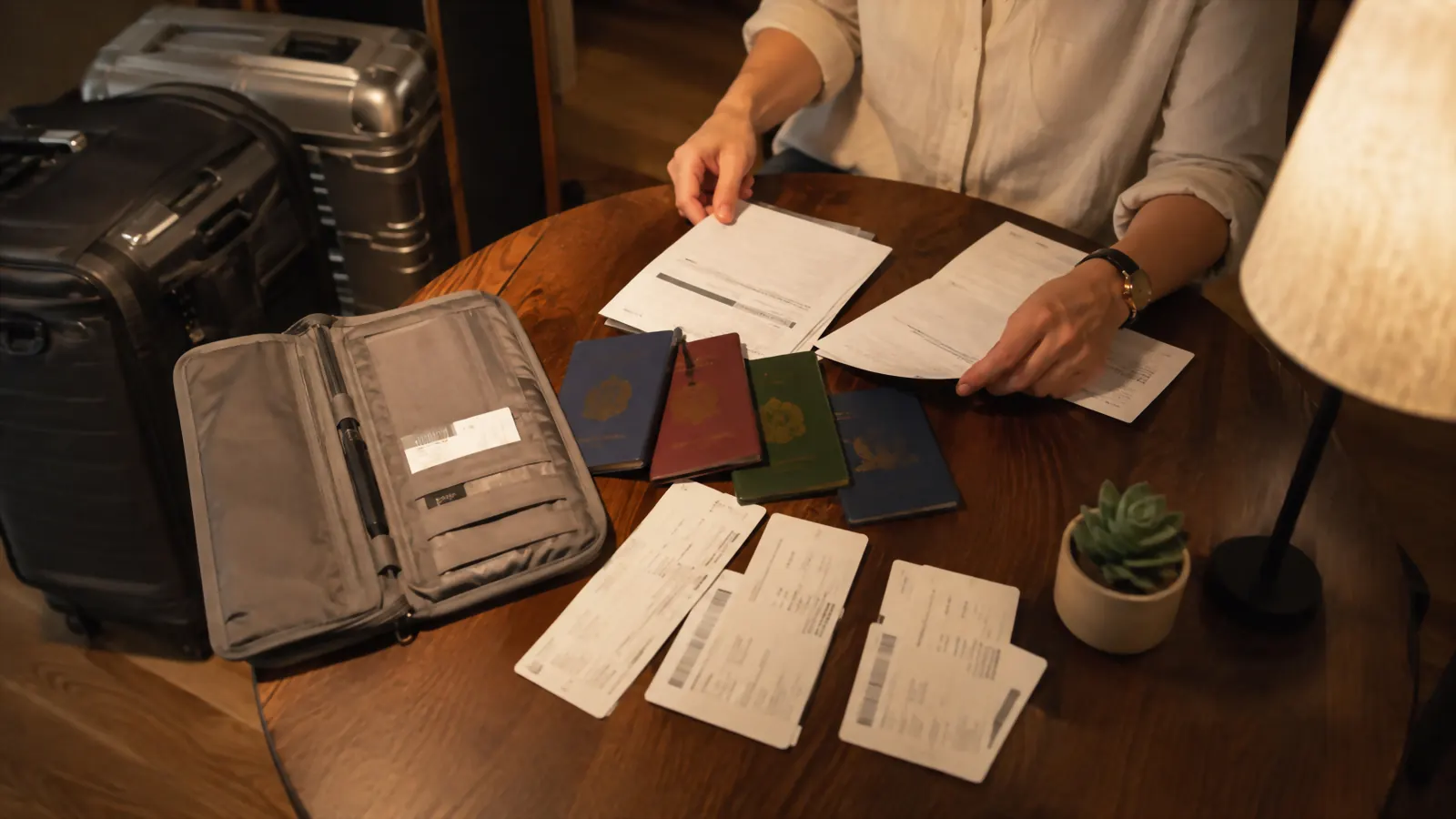
Before you leave, sit down as a family and actually open the organizer the way you will at the airport. Practice pulling out boarding passes for check-in, then putting them back in a spot you can reach again quickly for the gate. This takes two minutes and it removes almost all of the fumbling that happens under real time pressure. Kids old enough to hold their own documents should practice finding their own passport in the case, so it isn't the first time they've done it while a security line is forming behind them and everyone is watching.
This step matters more for flights with a tight connection or an early departure, when nobody has the patience to improvise a system for the first time. Families who skip this step tend to be the ones you see standing off to the side of security repacking a bag while their flight boards. A dry run turns "where did I put the boarding passes" into muscle memory before it ever becomes a real problem at the gate, and it costs you nothing but a few minutes at the kitchen table the night before.
Step 4: Assign each family member a job at check-in and security
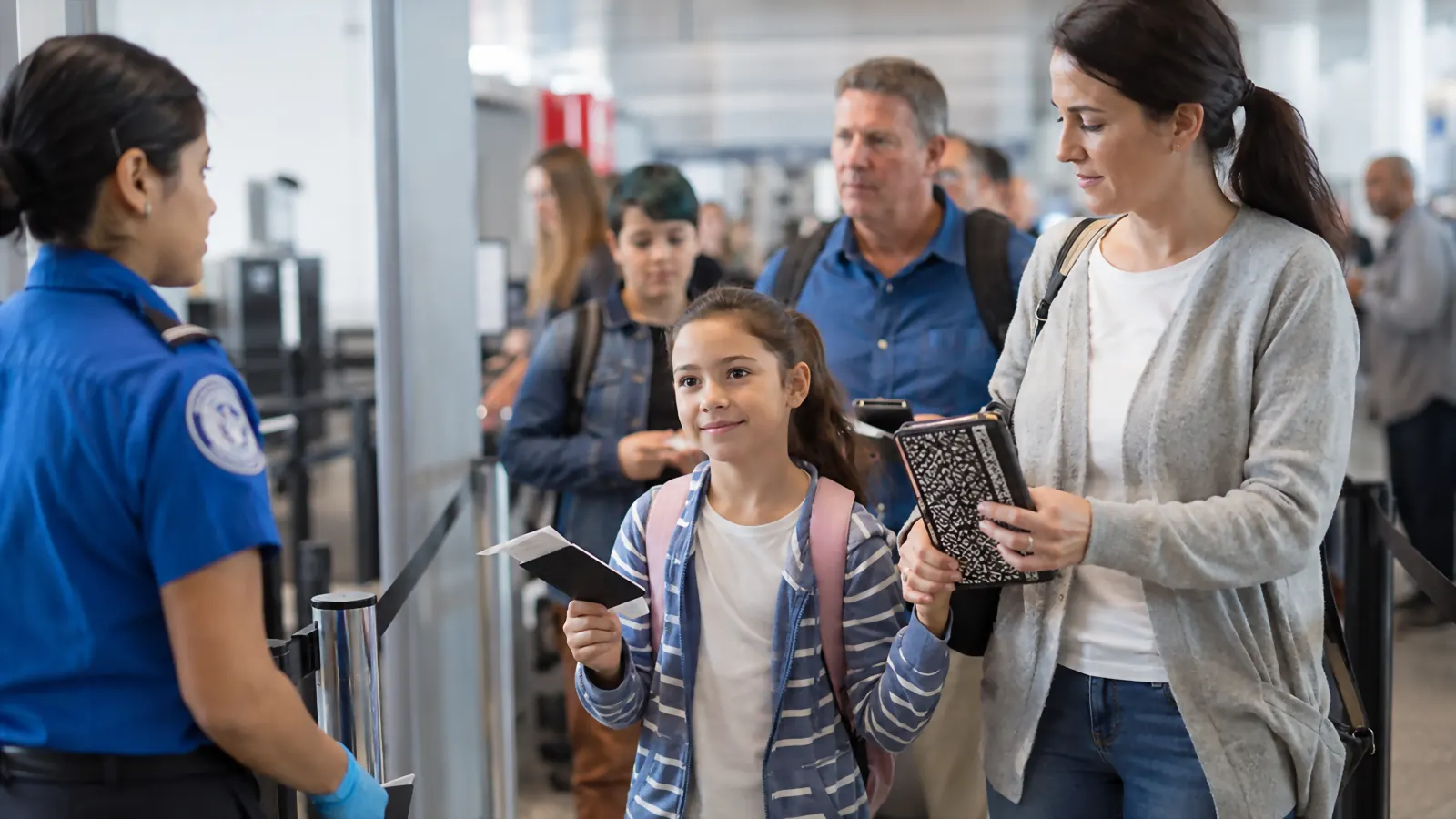
One adult should carry the organizer through the airport. That's not up for debate mid-trip, decide it before you leave the house. But everyone else still has a job. Older kids and teenagers hold their own passport and boarding pass from the moment they're handed over at check-in through security, so the organizer isn't being reopened five times in ten minutes just to hand someone their own paperwork. Younger children's documents stay with the organizer holder, but get pulled out and handed to a second adult before you reach the front of the security line, so nobody is digging through a full case while an officer is waiting.
Splitting the job this way keeps the line moving and keeps the organizer itself from becoming the bottleneck. It also means that if one adult gets separated in a crowded terminal, which happens more often with a family than people expect, the documents aren't all riding with a single person. The organizer stays with whoever is managing the group's core paperwork, and each traveler old enough to hold their own passport and boarding pass does exactly that, all the way to the gate.
This same job split matters again on the arrival end, especially if your flight lands somewhere that requires clearing a passport check before you can collect bags. Families who tried to manage that as one big shuffle at the counter, everyone crowding around a single adult holding every document, tend to slow the whole line down. If each traveler already has their own passport in hand from the plane, the family moves through as a group of individuals instead of one bottleneck, and the organizer holder is free to manage everyone's boarding passes and connecting flight paperwork instead.
Step 5: Keep a digital backup and a just-in-case pocket
Physical organization solves most of the problem, but not all of it. Before you leave, photograph the photo page of every passport in the family and email or message those photos to yourself and one other adult in the group. Do the same with your itinerary and any confirmation numbers. If a passport is ever misplaced mid-trip, having a clear photo speeds up everything that follows, and it costs nothing to take thirty seconds and do it at your kitchen table before the bags are even zipped.
Inside the organizer itself, keep one section as the "just-in-case" pocket, meant for the paperwork you hope you never need but don't want to be searching for if you do: travel insurance information, an emergency contact card, a printed copy of your return flight confirmation in case a phone dies. This is where the Valante's capacity for a family rather than a single traveler pays off again. There's room for the documents you use constantly and the ones you're only carrying as insurance, without either category crowding the other out or getting mixed together in the rush of a normal travel day.
What Else Helps
A few habits stack on top of the five steps above without adding real effort. Check passport expiration dates for the whole family at least a few months before you book, since renewal timelines catch families off guard more than almost anything else on this list, and a passport too close to expiring can cause real problems at check-in regardless of how organized the rest of your documents are. Label the outside of the organizer or keep it in a bag with a distinct color, so it's the one item nobody in the family mistakes for anything else at a security bin or hotel nightstand.
Mobile boarding passes are convenient, but I still print a paper copy for each family member on longer trips, and I keep those printed copies in the organizer alongside the passports. A dead phone battery at a gate is a bad time to discover that your boarding pass only exists in an app. The same goes for hotel confirmations and rental car vouchers: a phone screenshot is fine as a backup, but the printed version in the organizer is what you reach for first when you're standing at a counter and someone is waiting on you.
Do a headcount of documents the same way you'd do a headcount of kids, out loud, before you leave any hotel room, rental car, or gate area. It feels excessive the first few trips and then it becomes second nature, the same way checking for your phone and wallet is second nature before you walk out your own front door. For longer trips with multiple flights, I also do a quick recount every time we land, before anyone starts pulling other things out of the same bag the organizer lives in. It's a thirty-second habit that catches a misplaced boarding pass before it becomes a real problem at the next gate.
The families who move through an airport calmly aren't the ones with fewer documents to manage. They're the ones who decided, once, exactly where every document lives.
Stop Reassembling Your Documents at Every Checkpoint
The system above works with almost any case, but it works best with one built for a family from the start. The Valante organizer holds passports, boarding passes, and the paperwork you only need in a pinch in a single place, with RFID-blocking built in for the passports riding inside it all day.
Amazon Check Today's Price on Amazon →