
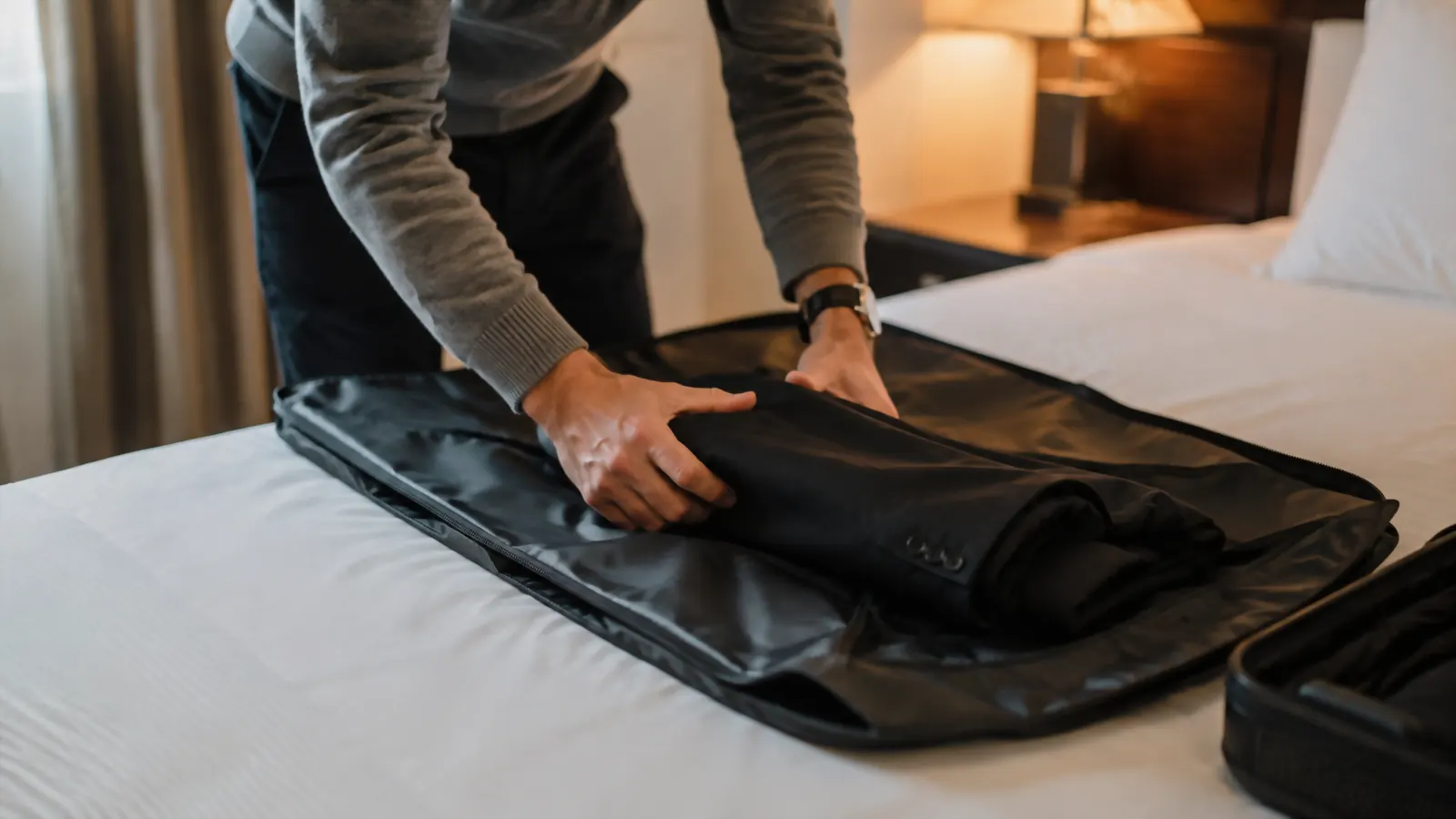
Most garment bag reviews get written by someone who used the thing once, for one trip, folding in a single blazer with nothing else competing for space. That's not how I travel. I'm out most weeks, and whatever I fold into the Lazebox 43" travel garment bag has to survive getting sandwiched next to shoes, a dopp kit, and whatever else got crammed in around it at six in the morning. Once you repeat that cycle enough times, you start noticing the things nobody mentions in a glowing review written the week the box showed up.
Lazebox builds this bag for exactly that kind of repeated business travel, an accessories zipper pocket up front, heavy duty construction aimed at trips rather than a closet shelf at home. I've run it through enough of those trips now that I'm less interested in whether it worked once and more interested in what the listing and the early reviews don't tell you: the sizing expectations that trip people up, the folding habit you actually have to build, and the one connection where this bag let me down a little.
The Quick Verdict
A solid, honest piece of travel gear once you understand what it actually is and isn't. It won't give you hanging-garment-bag results, and the pocket has real limits, but it does meaningfully cut down on the worst creasing compared to packing a suit loose.
Amazon Check Today's Price →The one packing habit that decides whether this bag works for you
Fold it right and the Lazebox 43" garment bag genuinely cuts down on wrinkles. Fold it wrong the first few times and you'll wonder what the reviews were talking about. See today's price and current availability on Amazon.
Amazon Check Today's Price on Amazon →How I Actually Tested This
I didn't just fold it once and call it a review. Over roughly six months I ran the Lazebox through gate-checked backpacks, a hard-shell rollaboard, and one trip where it sat folded in the bottom of a duffel-style carry-on for two full days between an early departure and a late connecting arrival. I also let it sit folded in a closet for stretches of two or three weeks between trips, un-fluffed, to see whether the fold creases set in harder the longer it stayed compressed.
I deliberately pushed the accessories pocket past what it's clearly meant for a couple of times, packing more than a belt and a pair of ties just to see where it stopped closing cleanly. And more than once I let a heavier bag sit directly on top of the folded garment bag in a tight overhead bin on purpose, instead of babying it the way you might if you were only testing it for a single glowing writeup. The point wasn't to be gentle. It was to find the actual limits.
I also used it for more than just suits. A stiff sport coat, a lightweight raincoat, and once a set of dress shirts for a longer stretch away from home, mostly to see whether the fold sizing that works for a jacket generalizes to other garments people actually pack. It mostly does, with some caveats I'll get into below.
I also tried to vary the conditions rather than just the contents. A couple of trips were humid, coastal stops where everything in a packed bag comes out feeling slightly damp regardless of what's protecting it, and a couple were dry, air-conditioned business-district hotels where a jacket tends to hold its shape better on its own. The fold performed more consistently in the dry-climate trips, which tracks with how most fabric behaves, but it wasn't a night-and-day difference. Worth knowing if you're headed somewhere humid and hoping the bag alone will compensate.
What the Five-Star Reviews Don't Mention
A lot of the glowing reviews for this bag read like they were written after one trip, and that shows in what they leave out. This is a fold-and-pack design, not a hanging suit carrier you sling over a shoulder through security. Some buyers seem to expect near-zero wrinkles because a handful of reviews say things like "came out perfect," without mentioning that their one good outcome might have come from a jacket that barely needed protecting in the first place, or a short flight with an easy overhead bin.
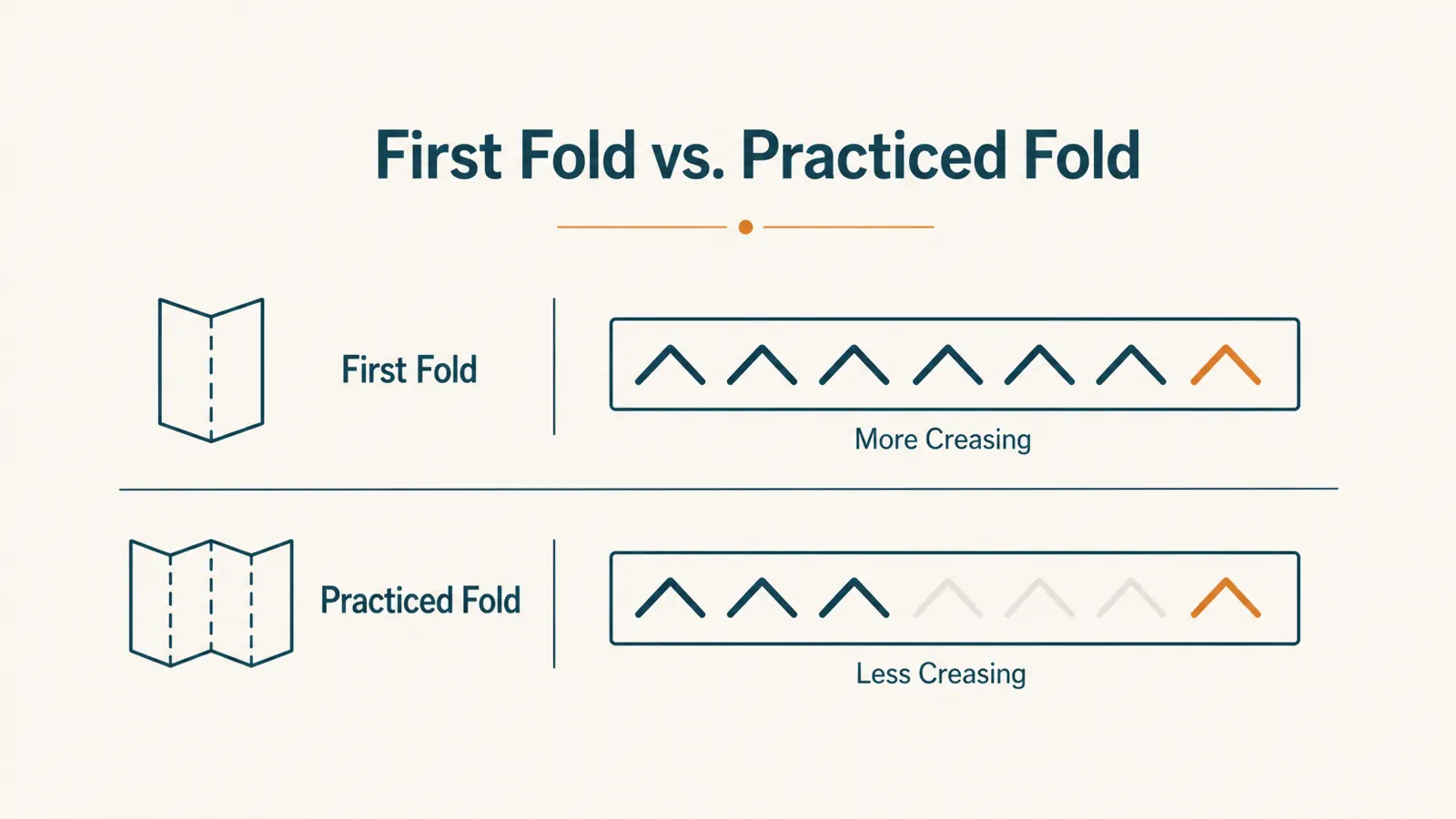
The bigger gap is the folding itself. My first attempt was clumsy. I folded the sleeves in at the wrong point, left too much slack along the 43-inch body, and ended up with more crease lines than I expected after unpacking. It took a handful of trips before I found a folding order that consistently kept the jacket's structure intact, tucking the shoulders in first, smoothing the lapel flat before the second fold, and not overpacking around it so it had room to sit without being crushed sideways.
Some of the listing photos don't help either. A couple show the bag partially open with a suit draped across it in a way that reads more like a hanging garment bag than a folded one, and I can see how that sets the wrong expectation before the box even arrives. If you go in picturing that image and end up with a folded bag you have to learn to pack correctly, the gap between expectation and reality is where a lot of the disappointed reviews seem to come from, not any actual defect in the product.
None of that is the bag's fault exactly, but it's also not something a first-week review can tell you, because a first-week reviewer hasn't repeated the packing cycle enough times to notice their own learning curve. If you buy this expecting flawless results out of the gate, you're setting yourself up to be more disappointed than you should be.
The Zipper Pocket Isn't the Selling Point It Sounds Like
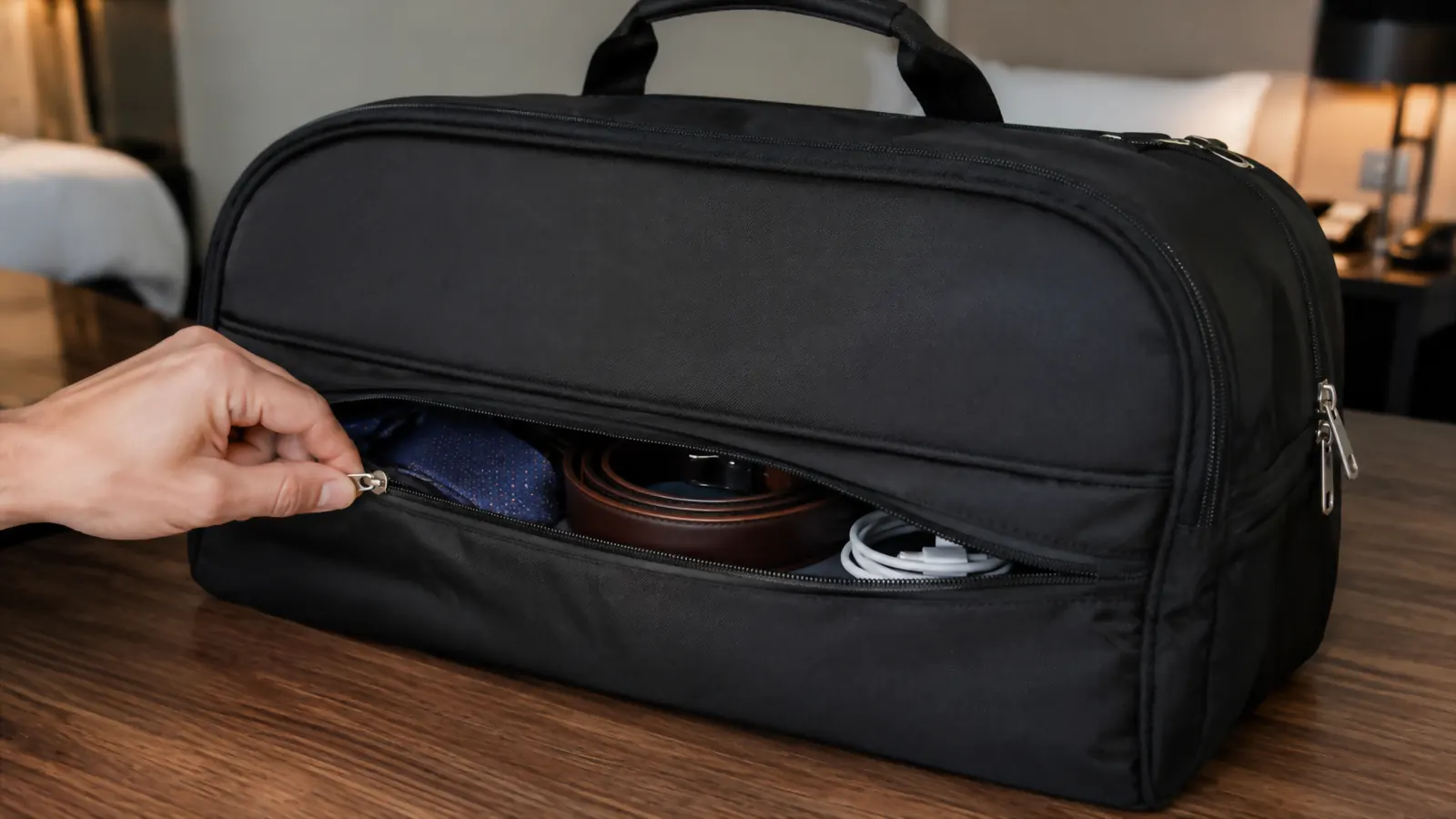
The front accessories pocket gets a lot of praise in the listing photos, and it does earn its keep for the basics, a belt, a couple of ties, a slim charging cable. What doesn't get mentioned is how quickly it stops being convenient once you push past that. The zipper pull on the pocket feels noticeably lighter and thinner than the main zipper running the length of the bag, and once you overstuff it, the whole folded bag sits lopsided, which makes it harder to lay flat inside a rollaboard's main compartment.
The pocket also isn't lined or padded. On one trip I tucked a charging brick with sharp corners into it without thinking, and when I unpacked, there was a faint pressure line on the shirt folded closest to that side of the bag. Nothing ruined, nothing that didn't shake out, but it's the kind of detail that would have saved me a small annoyance if a review had mentioned it up front. Now I keep anything with hard edges wrapped in a sock or a soft pouch before it goes into that pocket.
There's also no internal divider inside the pocket, so a belt, two ties, and a cable end up tangled together into a single mass rather than sitting in their own separate spaces. It's not a dealbreaker, since untangling a belt buckle from a tie takes a few seconds, but it's another small thing the product photos gloss over by only ever showing the pocket holding one or two items at most.
Used the way it seems intended, small flat items only, it's genuinely useful. Treated as a catch-all junk pocket the way I initially wanted to use it, it works against the rest of the bag instead of for it.
The Trip Where It Actually Let Me Down
Most of my trips have gone fine, which is why I still reach for this bag. But I want to be honest about the one that didn't. On a connection through a small regional airport, the duffel-style carry-on with the folded garment bag inside got gate-checked, and by the time I retrieved it, it had spent a long layover wedged under a hard-shell rollaboard belonging to another passenger in a genuinely tight overhead bin.
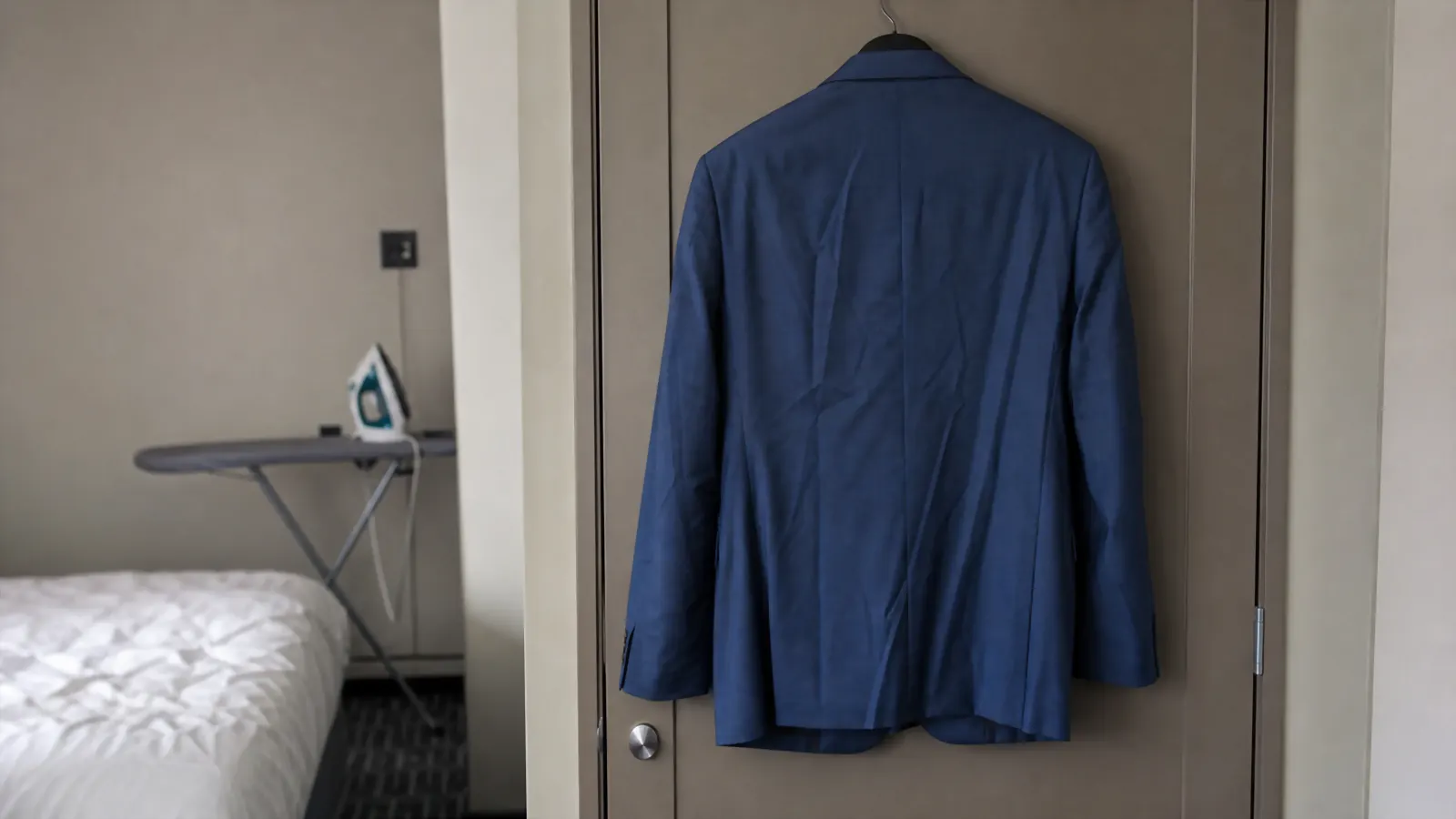
When I unpacked that night, the jacket had a deeper crease across the back than anything I'd seen from this bag before, close to what I used to get from just folding a suit loose in a suitcase. It steamed out with some effort, but it needed more than the usual quick touch-up before I could wear it the next morning.
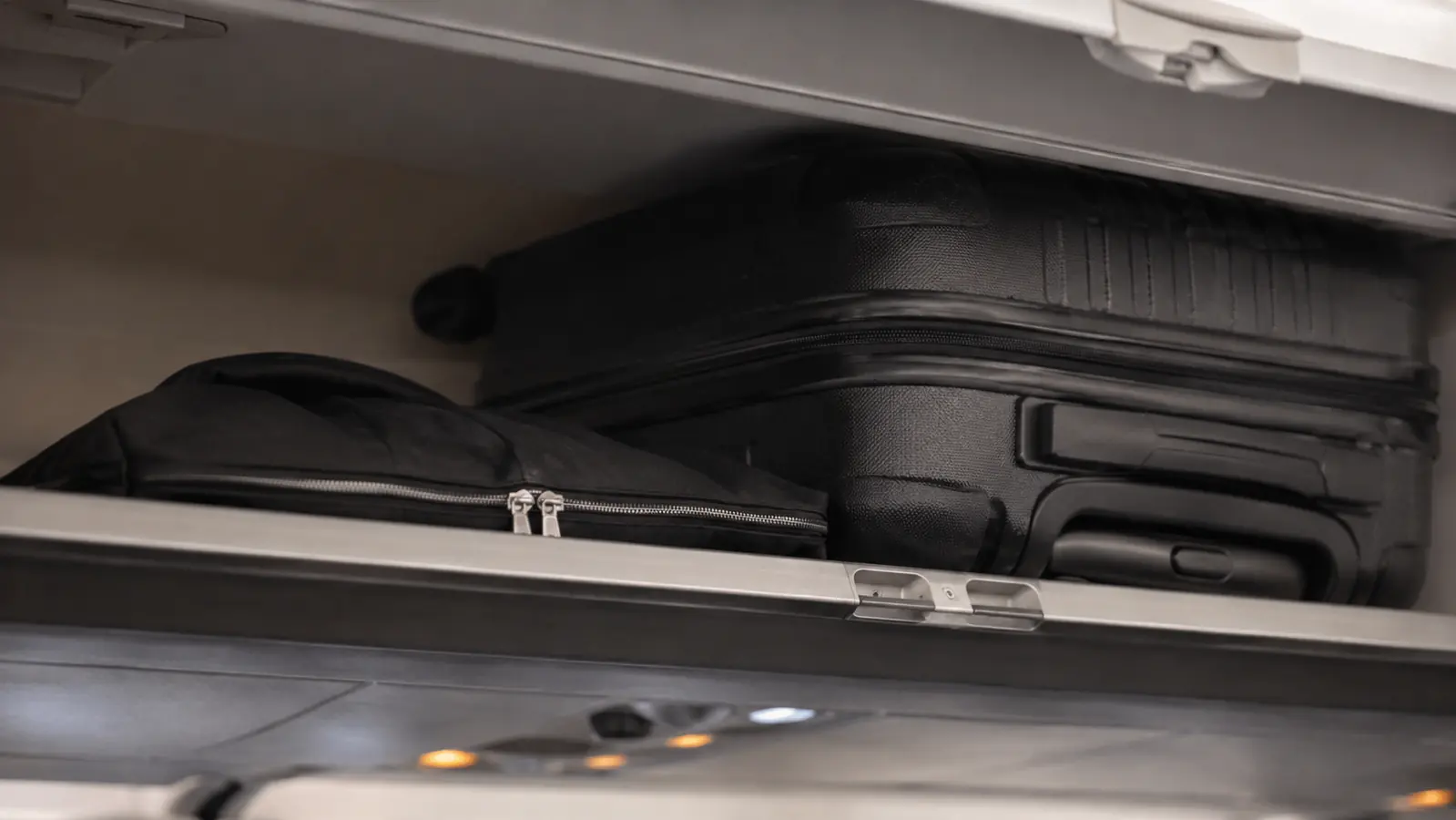
That trip taught me something the reviews don't spell out. This bag protects a garment from the everyday friction of being folded and packed, but it can't fully protect against sustained, direct weight from something heavy sitting on top of it for an extended stretch. It's a fold-and-pack garment bag, not armor. On small aircraft with genuinely cramped bins, that's a real limitation worth knowing about before you count on it for a same-day meeting you can't afford to show up wrinkled for.
It also changed how I pack now. On any leg I know is a small regional jet with limited overhead space, I put the folded garment bag on top of everything else in my carry-on instead of at the bottom, so it's less likely to end up underneath another passenger's rollaboard once bins fill up. It's a small adjustment, but it's one the listing never suggests and I only learned by having a jacket come out worse for wear.
What I Considered Instead
Before settling on this bag as my regular option, I weighed it against a couple of alternatives. A proper hanging garment bag, carried separately on its own strap through the terminal, still wins on pure wrinkle prevention, because nothing else sits on top of what's inside it. But that means one more item to track through security, at a gate, and in a rideshare trunk, which defeats the point for someone trying to travel with a single bag.
I also went back to my old habit for a couple of trips, just folding a jacket loose on top of everything else in a duffel-style carry-on, to remind myself what the baseline actually looks like. It's worse, consistently worse, with deeper creases across the shoulders and lapel almost every time. The Lazebox isn't perfect, but it's a clear step up from that baseline, even accounting for the one bad trip above.
The plastic sleeve a dry cleaner sends a suit home in was the other option I revisited during this test. It slides right off a hanger the moment the hanger tips sideways in transit, which happens on almost every trip, and it balls up into an awkward lump rather than folding down flat enough to slide into a single carry-on the way this bag does. I also tried rolling the jacket the way you'd roll a t-shirt for a packing cube, on the theory that rolling usually beats folding for wrinkles. It didn't, not for something structured like a blazer, the rolled shape distorted the shoulders in a way the Lazebox fold never did. For someone trying to pack light without sacrificing a suit, none of the alternatives I tried beat this one on balance, they just fail in different places.
What I Liked
- Meaningfully reduces creasing compared to folding a suit loose in a bag, most of the time
- Folds compact enough to live inside a single carry-on instead of adding a second item
- Zipper on the main opening has stayed smooth through six months of repeated use
- Accessories pocket genuinely helps once you know its real limits
- Works for more than suits, a sport coat and dress shirts have both come out fine
Where It Falls Short
- The folding technique takes a few trips to get right, first attempts tend to disappoint
- The pocket's zipper feels lighter duty than the main one and bulges if overstuffed
- Sustained weight on top of it in a cramped overhead bin can undo most of the benefit
- Not a substitute for a hanging garment bag if you truly cannot afford any wrinkling
The reviews that call this wrinkle-free were written by people who used it once. Six months in, meaningfully-fewer-wrinkles is the honest description, and that's still worth something.
Who This Is For
This bag makes sense for someone who's willing to build the folding habit and adjust their expectations from zero wrinkles to noticeably fewer wrinkles. If you travel most weeks for work, pack a jacket into a single carry-on rather than checking a separate garment bag, and you're okay with a short learning curve on the first few trips, this earns its place. It's also a reasonable pickup for someone who only travels formally a handful of times a year, an interview, a wedding, a conference, and doesn't want a dedicated hanging garment bag taking up closet space the other fifty weeks.
It also suits someone who's already made peace with doing some kind of touch-up before most meetings anyway and just wants that job to be smaller than it would be without any protection at all. If your bar is realistic instead of flawless, six months of carrying this on repeat trips has given me no reason to go back to how I packed before.
Who Should Skip It
Skip this if you read a handful of five-star reviews and are expecting hanging-garment-bag results from a folded design, because that expectation will leave you disappointed no matter how well you fold it. It's also not the right call if your travel regularly involves small regional aircraft with genuinely tight overhead bins and you can't risk a heavy bag sitting on top of yours for a long layover. And if what you're packing is mostly casual, knits, t-shirts, anything that comes out of a bag looking fine on its own, carrying a dedicated garment bag for it is solving a problem you don't have.
It's also probably not the right fit if you're not willing to put in the first few clumsy trips it takes to learn a folding order that works. Buy it expecting an instant fix and you'll likely end up in the same disappointed camp as the reviews that call it a letdown, when the real issue is usually the folding, not the bag.
Know what you're actually buying before your next trip
This isn't a miracle bag, but folded correctly it beats the alternatives most travelers default to. See current pricing and availability on Amazon before you pack for your next trip.
Amazon Check Today's Price on Amazon →