
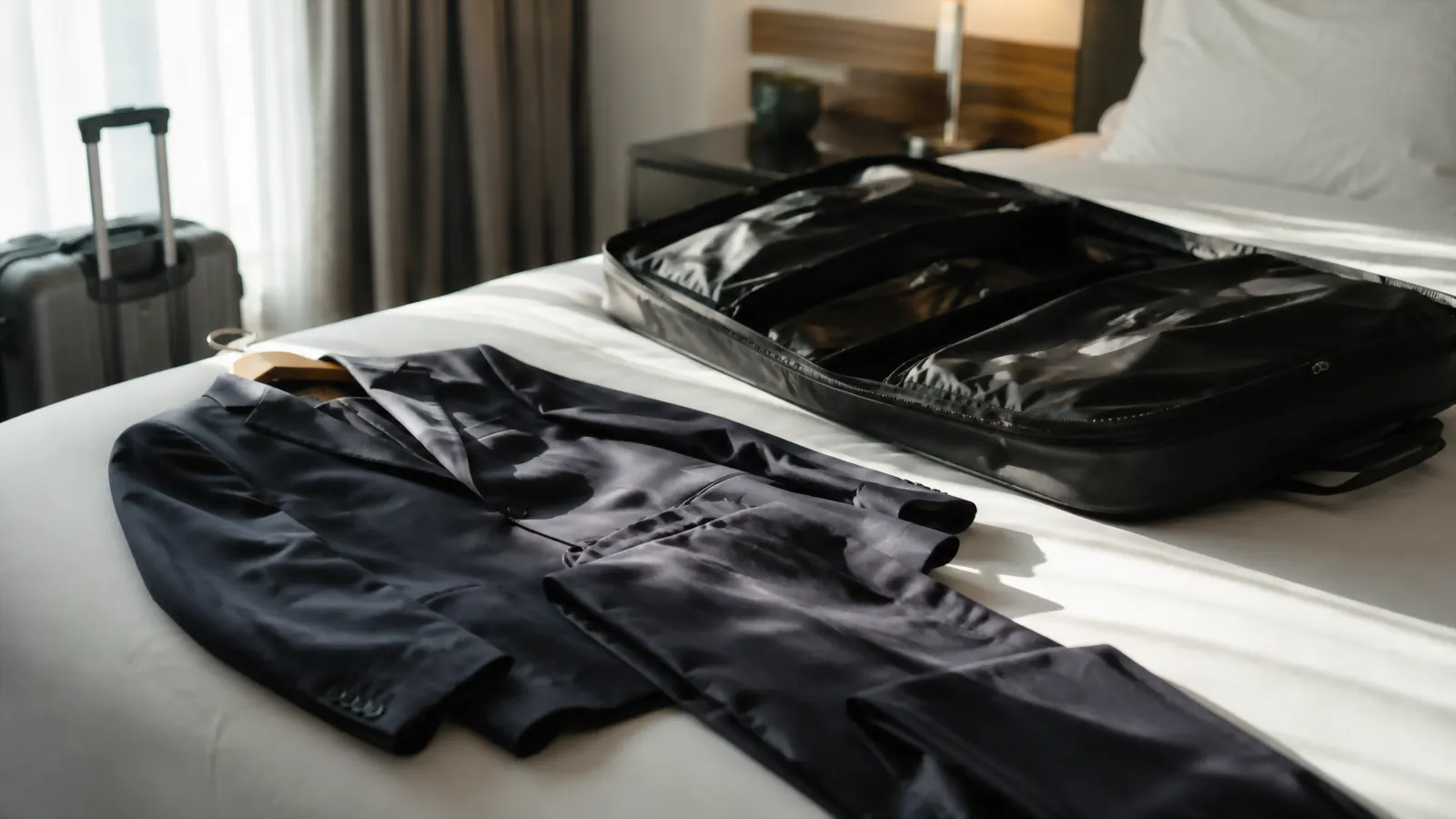
Most people who tell you they can't pack a suit wrinkle-free just haven't found an order that works. They fold the jacket the way they'd fold a sweater, jam it in wherever there's a gap, and act surprised when it comes out looking like it went through a wash cycle. The fix isn't a different suit or a steamer you have to remember to pack. It's a repeatable folding order, done inside a garment bag instead of loose against everything else in your bag.
I fly out most weeks and I've been packing a suit this way, in a Lazebox 43-inch garment bag, for long enough that I don't have to think about it anymore. The steps below are the exact order I use, from emptying pockets to hanging the jacket at the other end. None of it requires a hotel iron, and none of it requires babying the bag through security like it's made of glass.
None of this is complicated, which is honestly the point. A method that only works if you're careful and unhurried is a method that fails you on the one morning you're rushing to a gate with a coffee in one hand. What follows is built to survive a rushed pack, a gate-checked bag, and a carry-on that gets crammed into an overhead bin by someone else's roller bag pressing against it.
Get the bag that makes this method work
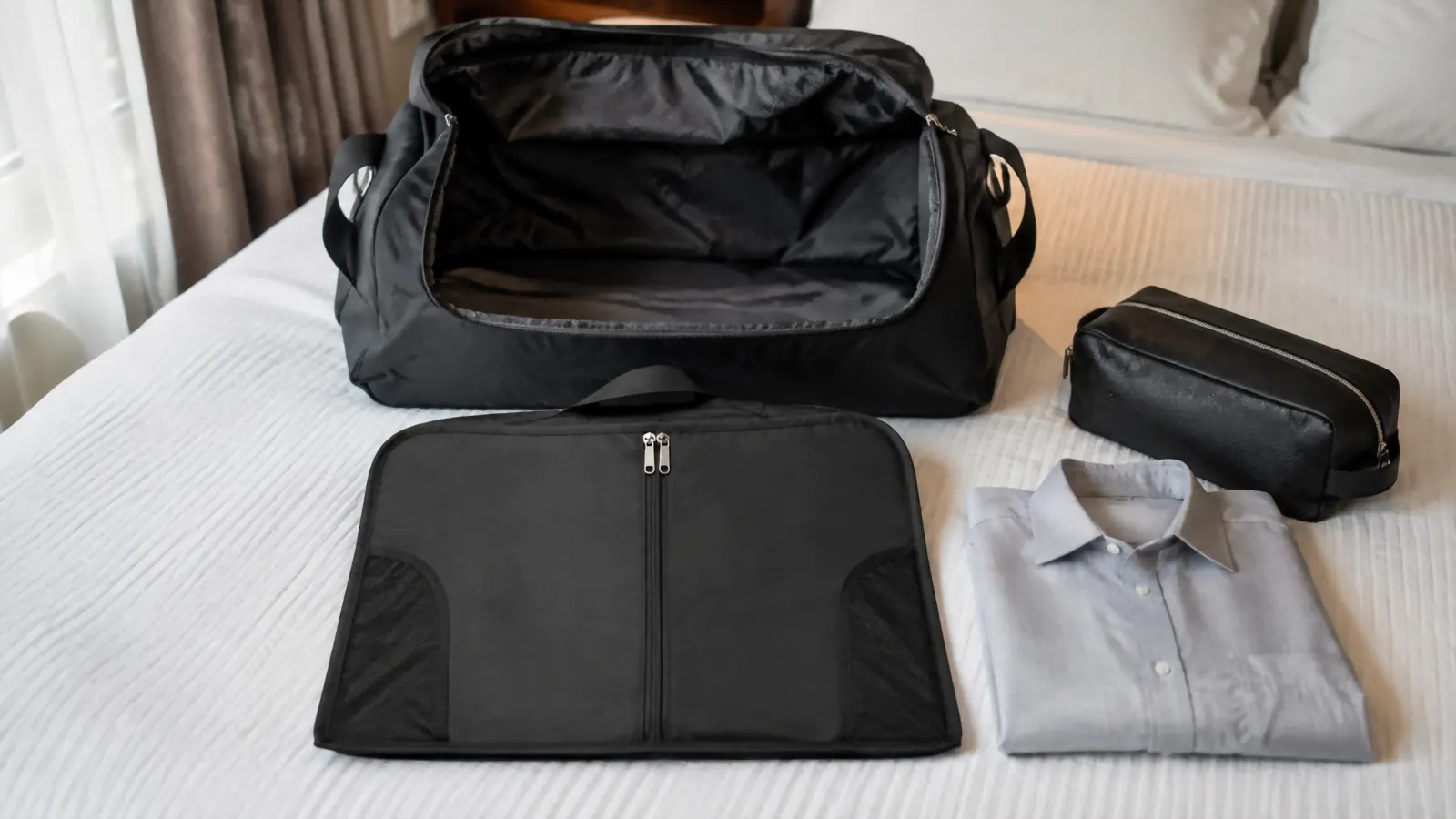
The folding order below only holds up if the bag itself lies flat and closes without bunching. The Lazebox 43-inch garment bag has a zipper pocket for the small stuff and enough length to keep a suit's fold lines shallow instead of sharp.
Amazon Check Today's Price on Amazon →Step 1: Empty every pocket and unbutton everything
Wrinkles you can trace back to a specific cause are the easiest ones to avoid, and pockets are the most common cause I still see people skip. A phone, a set of keys, a hotel key card left in a jacket pocket will press a hard line into the fabric every time the bag shifts, and it shifts constantly in an overhead bin or a duffel getting stacked on and off a rideshare floor.
Unbutton the jacket completely, including the sleeve buttons if it has functioning ones, and unbutton the trousers at the waist. A buttoned jacket folds into a stiffer shape than the fold line wants, and that stiffness is exactly what turns a soft crease into a sharp one by the time you unpack it.
I also check the trouser pockets, since a folded boarding pass or a spare pen left in there does the same damage as a phone in a jacket pocket, just lower down where it's easier to forget about. It takes ten seconds and it's the step that gets skipped most often because it feels too small to matter, right up until it's the reason for a crease you can't explain later.
The breast pocket is worth a second glance too. A folded pocket square or a stray receipt tucked in there sits directly under the lapel fold, and that's a spot where a crease shows the moment you put the jacket back on. Clearing pockets top to bottom, jacket and trousers both, is the fastest single habit for anyone trying to pack a suit wrinkle-free without adding steps to the process.
Step 2: Fold the trousers first, along their existing crease
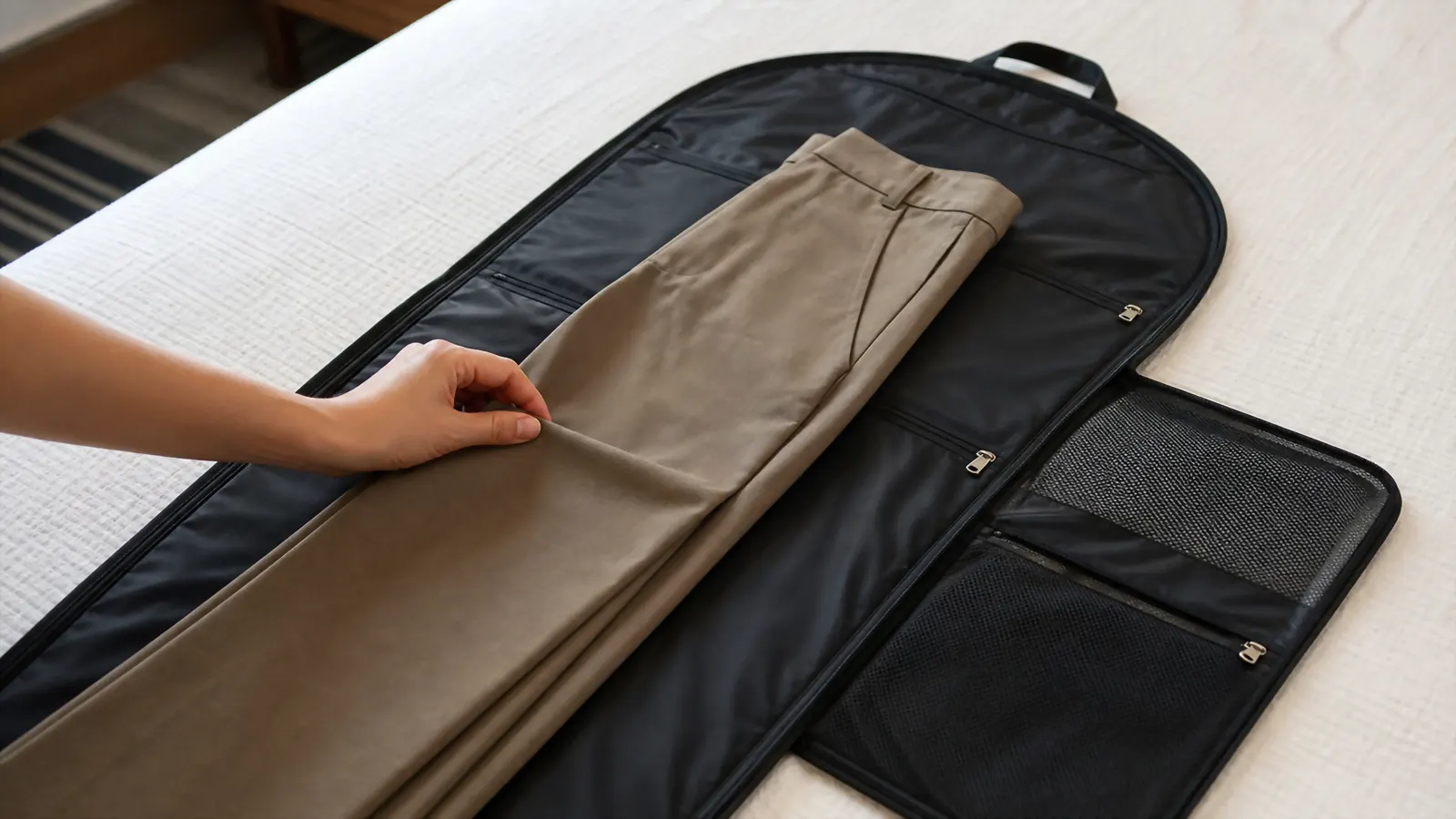
Trousers go in first because they're the base layer of the fold, and because they already have a crease built in that you want to work with rather than against. Lay them flat, match the two legs together, and fold along the crease that's already pressed into the fabric rather than picking a new line. Fighting the existing crease is how you end up with two competing fold marks instead of one clean one.
Lay the folded trousers into the garment bag first, along the full 43-inch length, waistband toward one end. This becomes the base the jacket sits on top of, which matters more than it sounds like it should. A jacket folded directly against a hard surface or a stack of shirts creases differently than one folded on top of trousers that give a little.
If you're packing trousers for more than one suit, keep each pair folded on its own rather than stacking two pairs together before laying them in. Two pairs of trousers stacked and folded as one unit tend to slide against each other inside the bag, and that small movement is what turns a clean fold line into a soft, uneven bulge by the time you land.
Dress shirts can travel folded on top of the trousers the same way, if you're packing more than just a suit. Button the top button, lay the shirt flat with the sleeves folded behind it, and keep it toward the same end as the waistband so it isn't the layer taking the brunt of any bend in the garment bag once it's folded in half.
Step 3: Turn the jacket half inside out at the shoulders
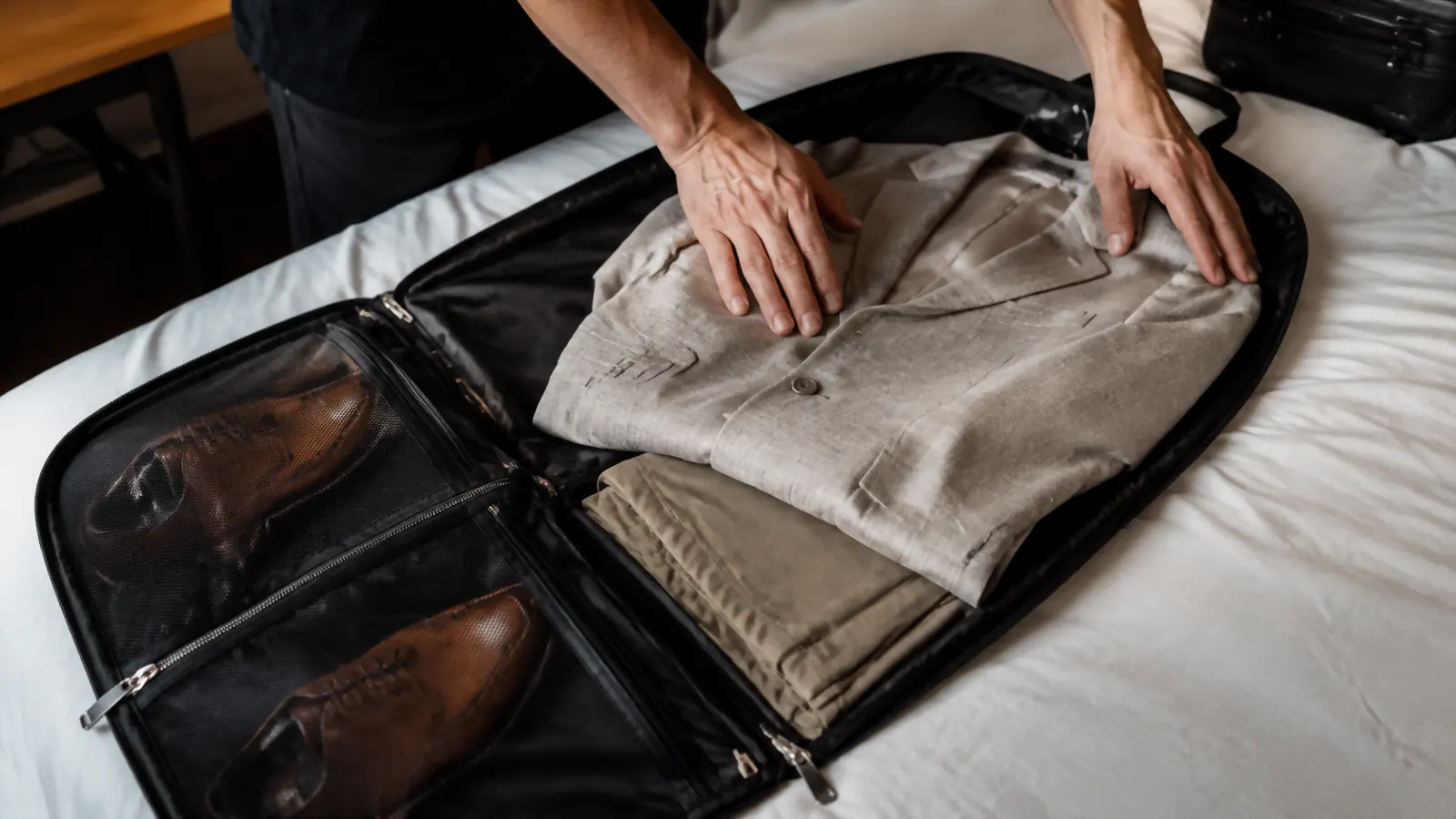
This is the step most people skip, and it's the one that actually stops the deep shoulder crease that ruins a jacket's line more than anything else. Hold the jacket by the shoulders, and turn one shoulder inside out so the lining shows while the other shoulder stays right side out. Then bring the inside-out shoulder over the other one, so the shoulders nest together instead of stacking flat on top of each other.
Cross the sleeves in toward the chest rather than letting them hang loose to either side. What you're building is a fold where the shoulder seams, the part of a jacket that shows a crease the most obviously, end up cushioned by fabric on both sides instead of pressed flat against a hard edge.
This step feels awkward the first couple of times, and I clumsily folded the sleeves in at the wrong point more than once before it clicked. Practice it once at home, not for the first time on a hotel bed the night before a meeting, and it becomes muscle memory within a few trips. Once it does, the whole fold takes under a minute.
Step 4: Lay the jacket over the trousers and fold the bag in half
With the jacket folded at the shoulders, lay it on top of the trousers already sitting in the garment bag, roughly centered along the length. Smooth it down so there's no bunching at the collar or the hem, then fold the garment bag itself in half. This is where the accessories zipper pocket earns its spot up front. Tuck a belt, a couple of ties, and a slim charging cable in there before you close it, so you're not digging through folded clothes to find them later.
Zip the bag shut once it's folded flat. You want it closing without a fight. If it's straining to zip, something inside has shifted or you've packed more than the fold can handle cleanly, and that strain is exactly what turns into an extra crease you didn't plan on.
A quick smoothing pass with a flat hand across the folded bag before you close it catches most of the bunching. Run your palm from one end to the other, feeling for any lump where a sleeve or a pant leg has bunched under the fold rather than lying flat. It takes a second, and it's the difference between a fold that holds and one that shifts the moment the bag gets picked up.
Check which way the zipper pull sits before you close it, too. Keeping it on the outer edge rather than buried against the fold means you're not tugging the zipper across fabric that's already under a little tension from being folded, which over enough trips is what starts to fray a zipper line before anything else on the bag gives out.
Step 5: Pack it flat and low, and unfold it the moment you can
Where the folded garment bag sits inside your carry-on matters almost as much as the fold itself. Lay it flat along the bottom of a duffel, then build everything else, shoes, a toiletry bag, a change of clothes, around and on top of it rather than under it. Weight sitting flat on top of a folded suit for a few hours in transit is fine. Weight compressing it from an odd angle in an overhead bin, wedged sideways under someone else's roller bag, is what causes the deep creases that no amount of careful folding prevents.
On a genuinely tight connection, where I know the carry-on is getting gate-checked or wedged into a smaller regional-jet overhead bin, I flip that order and put the folded garment bag on top of everything else instead of the bottom, so nothing heavy compresses it from above during the leg I can't control.
The last step is the one people forget because by the time you land, you're thinking about everything except the suit. Unzip the garment bag and hang the jacket and trousers as soon as you're somewhere with a closet or even a door hook, even if you're not wearing them for hours yet. A suit that sits folded in a bag for an extra half day picks up creases that hanging early would have let fall out on its own.
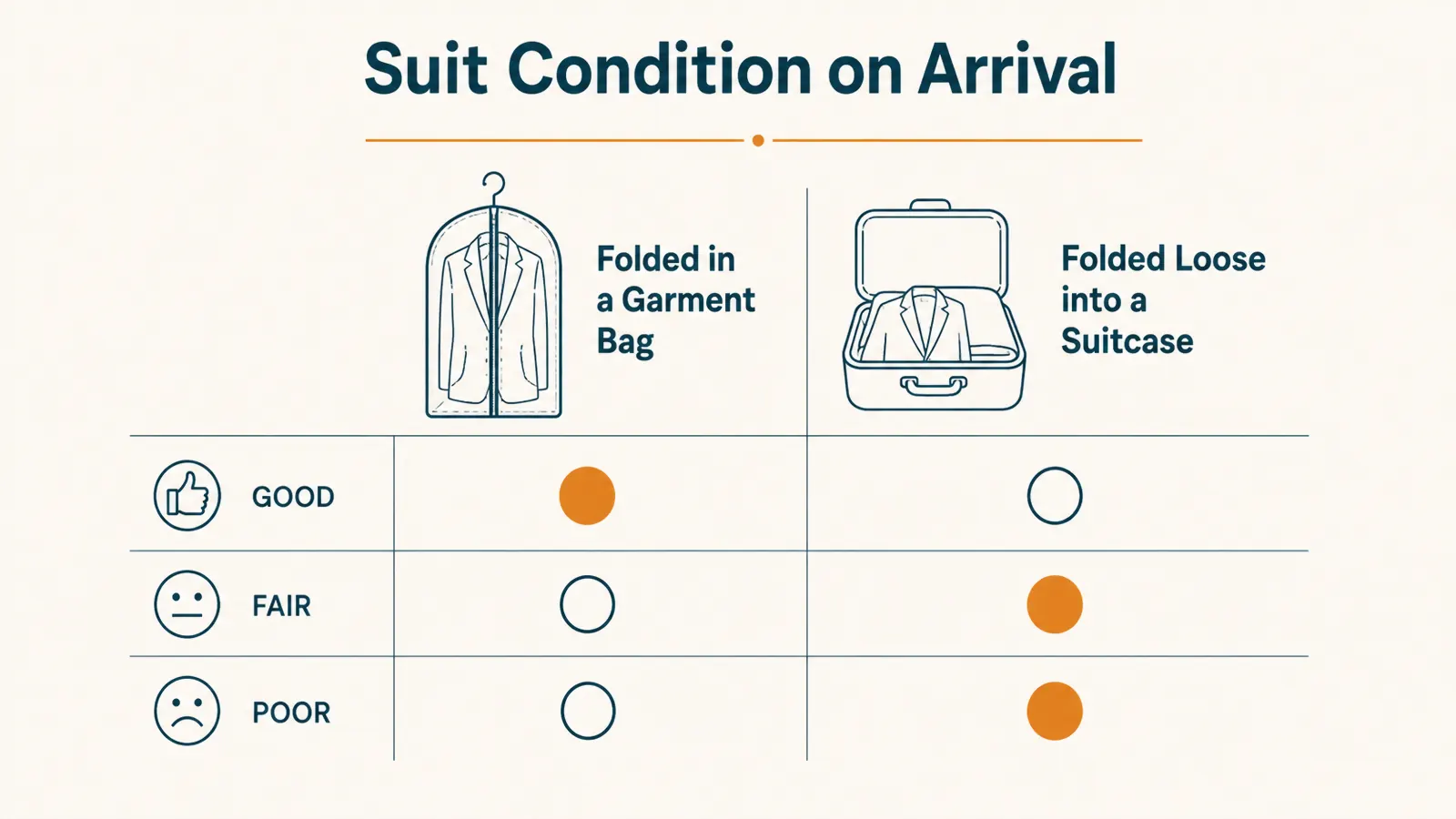
The fold order matters more than the fabric. I've packed the same suit two different ways and gotten two different results out of the same bag.
What Else Helps
A couple of small habits stack on top of the folding order and make the difference more consistent trip to trip. Pack the garment bag first, before anything else goes into your carry-on, so you're never tempted to cram it in around stuff that's already claimed the good, flat spots. Building the rest of your packing around the suit, instead of squeezing the suit in last, is a small mindset shift that changes how it comes out on the other end.
If the jacket still shows a light crease when you unfold it, and it sometimes will, a few minutes hanging in a steamy bathroom while you shower does more than a hotel iron most people don't want to deal with anyway. That's not a failure of the method. It's just what fabric does after being folded for a few hours, and it's a much smaller job than pressing a suit that was never protected in the first place.
It also helps to think of the fold as reversible rather than permanent. If you unfold the garment bag partway through a trip to grab something and re-fold it later, take the extra thirty seconds to redo the jacket's shoulder fold properly instead of just stuffing it back in the way it happened to land. A rushed re-fold undoes most of the benefit the first careful fold gave you.
That's really the whole method. Empty the pockets, fold the trousers along their crease, turn the jacket's shoulders inward, lay one over the other and fold the bag flat, then pack it low and unfold it early. None of those five steps takes long on its own, but done in order, in a garment bag built to hold a shallow fold instead of a sharp one, they're what separates packing a suit wrinkle-free from packing one and hoping for the best.
Build the habit around a bag made for it
This folding order works with any garment bag long enough to keep the fold lines shallow, but it works best with one built for repeated use. The Lazebox 43-inch garment bag is what I fold into every week, front pocket and all.
Amazon Check Today's Price on Amazon →